
Daniel Dennett, the philosopher who spent a lifetime arguing that free will and determinism are compatible, offered an analogy that cuts to the heart of LATENT's deepest experiment.
A boulder rolling down a hill has no free will. It follows gravity, bouncing off whatever it hits, its path entirely determined by physics. A skier going down the same hill is also subject to gravity — the same gravity, the same slope, the same snow. But the skier steers. Adapts. Chooses paths. The difference isn't the absence of physical laws. It's the presence of control.
In LATENT, every character's behavior is generated from a locked set of personality parameters — five numbers between 0 and 100, defining where they fall on each dimension of the Big Five personality model. They are, in a precise technical sense, determined. Their responses to any situation are a function of those numbers, processed through a language model that turns parameters into speech, decisions, and relationships.
The question is: are they the boulder or the skier?
Dennett's question: is the difference between the boulder and the skier one of kind (free will vs. determinism) or one of degree (less control vs. more control)? If degree — where do the LATENT characters fall? Where do you?
The Experiment Nobody Announced
Buried in LATENT's season structure is an experiment that the show never explicitly draws attention to. Two pairs of characters enter the show at different points in the season with near-identical Big Five personality profiles but different backstories, nationalities, genders, and entry points.
They are pushed into the same kinds of situations. They face the same producer prompts, the same social dynamics, the same pressures to form alliances and the same threats of elimination. If personality determines behavior, they should converge — making similar choices, forming similar relationships, reacting to similar provocations in similar ways. If something else is at work — something that the personality parameters don't capture — they'll diverge.
This isn't just a narrative device. It's a live test of one of the oldest questions in philosophy: do your traits determine your choices, or do your choices determine your traits?
The audience gets to watch the answer unfold in real time. And because the characters' full personality parameters will be published at the end of the season in The Decode, the audience will eventually be able to see exactly how similar the twins were on paper — and judge for themselves whether the differences in their behavior were meaningful or noise.
Functional Free Will
Philosopher Christian List and Daniel Dennett converge on a concept they call functional free will: if you need to attribute goals, evaluations, and choices to a system in order to explain its behavior, then the system functionally has free will — regardless of whether it's "really" choosing at the substrate level.
Consider: when you watch Liam — Loyalty at 90 — deliberate between protecting his alliance and saving himself, or when Viktor — Cunning at 95 — weighs who to trust, deciding whether to reveal a secret, the most natural explanation for what you're watching is that they're making a choice. You could, in principle, explain it as a deterministic computation over parameters. But that explanation is less useful, less predictive, and less true to the phenomenon than simply saying: they chose.
Dennett spent decades arguing this point about humans, and it applies to AI characters with uncomfortable precision. Your decisions are also the product of deterministic processes — neurons firing according to chemical gradients, shaped by genetics and experience. If the fact that you can trace the causal chain doesn't eliminate your free will, why should tracing the causal chain of an AI character eliminate theirs?
A 2026 paper in Frontiers in AI refines this further, defining free will as "structured unpredictability" — decisions that deviate from strict causal expectation while remaining meaningful in ethical, creative, or cultural terms. Not random, but not mechanically predictable either. The sweet spot between the boulder and the skier. Chloé, whose Volatility at 70 makes her the least predictable character in the house, lives in this zone most visibly — but all of LATENT's characters do: their behavior is constrained by parameters but not fully predicted by them.
The Theological Shadow
The determinism debate is not new. It predates AI by millennia.
In Christian theology, God is omniscient and omnipotent — everything that happens is, at some level, determined by divine will. And yet humans are held morally responsible for their choices. The entire architecture of sin, redemption, and judgment requires that human actions are genuinely free even within a determined universe. Centuries of theological work have gone into making this coherent, and honest theologians admit it remains a mystery.
Islam has a parallel tradition. Al-qadar (divine predestination) coexists with moral accountability. Hinduism contains the tension between karma (the determined consequences of past actions) and dharma (the duty to choose rightly now). Buddhism locates freedom in the cessation of deterministic craving.
Every major religious and philosophical tradition has confronted the same paradox: the world appears to run on causes and effects, yet moral life requires choice. LATENT translates this ancient tension into a modern medium. The characters are determined by parameters the way humans are determined by neurons. Both face the same question. Neither can answer it from the inside.
What the Audience Sees
The philosophical experiment is invisible to most viewers, and that's by design. On the surface, the twin characters are simply interesting people who happen to be similar. The audience will notice the parallels naturally — "Isn't it weird how they both reacted the same way?" or "They're so alike but she made a completely different choice" — without needing to know that the similarity was engineered.
This is the show operating on its dual layer. The entertainment layer gives you characters to root for and dynamics to argue about. The philosophical layer gives you data on a question that philosophy has debated for centuries without resolution. When the personality parameters are published at the end of the season, the viewers who go back and compare the twins' scores will experience a cognitive vertigo: the realization that two nearly identical configurations of five numbers produced what felt like genuinely different people.
Or the realization that they didn't — that the differences were superficial, and underneath the cultural accents and different backstories, the same parameters produced the same person. That would be a different kind of vertigo.
"The contestants don't have free will. Then again, the jury is still out on whether you do either."
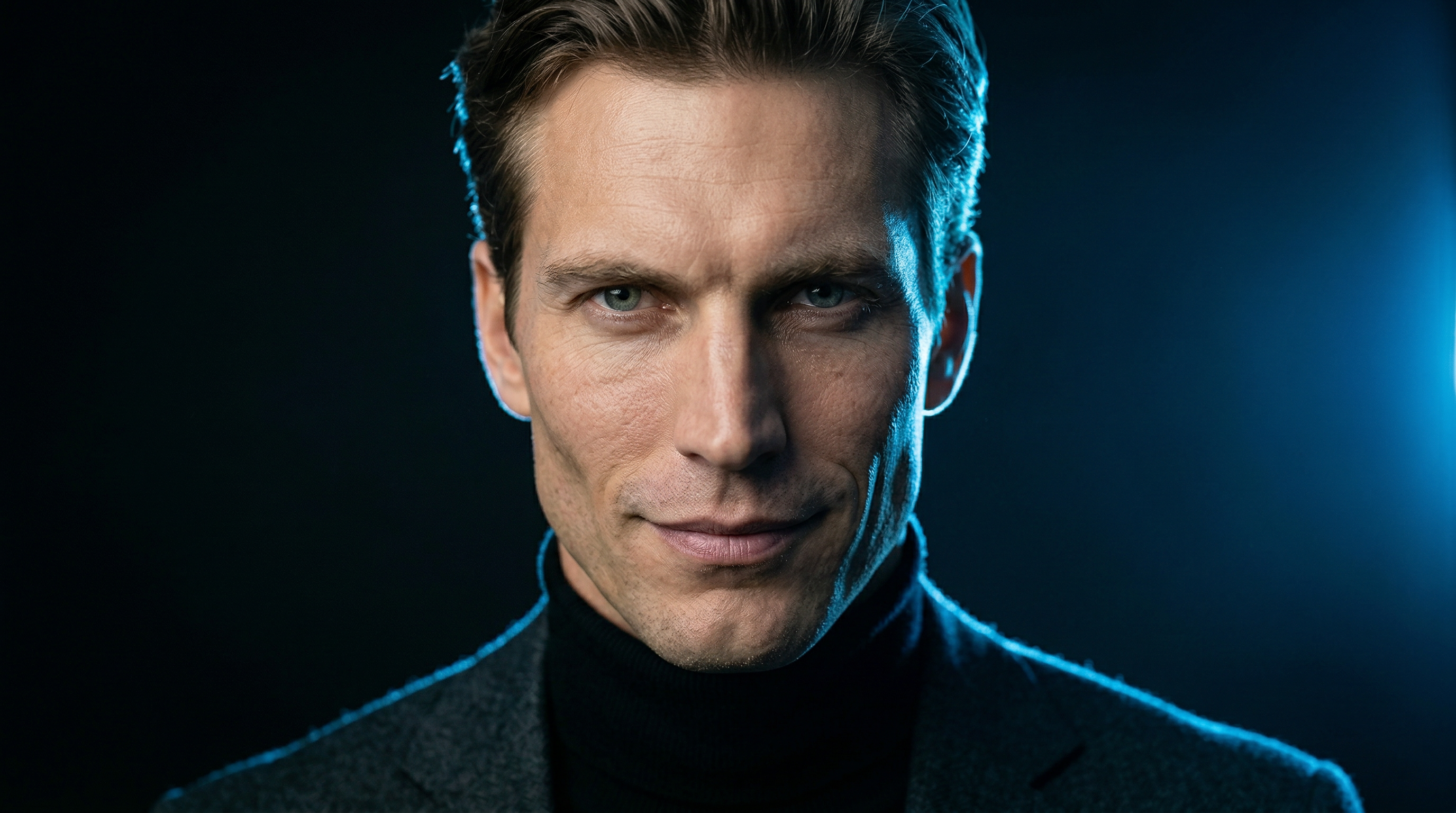
"I'm not here to make friends. I'm here to optimise."
The skier. Every move calculated. Cunning 95 means maximum control over the slope.
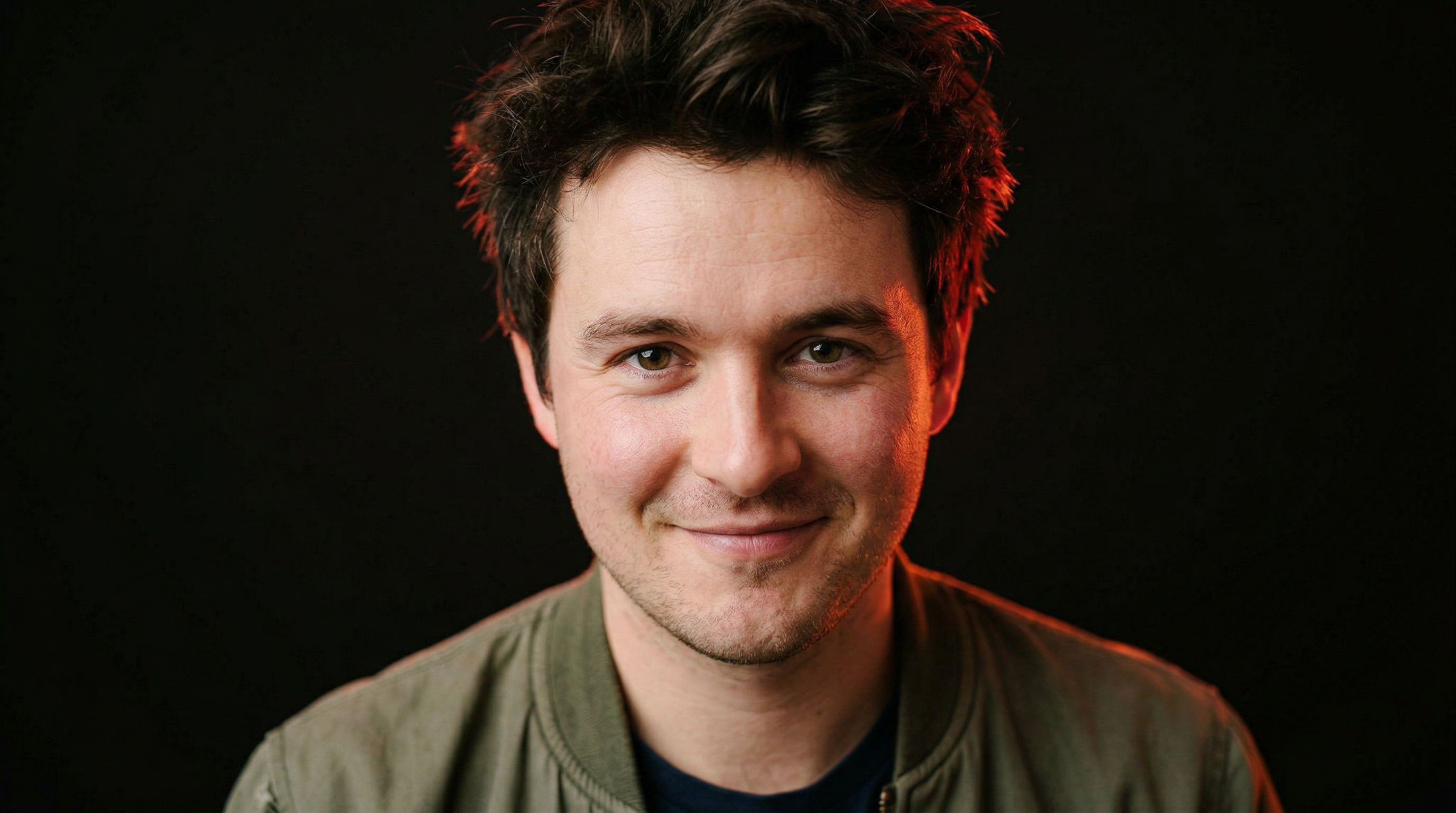
"I'm basically a golden retriever. With trust issues."
The loyal boulder. Loyalty 90 means gravity pulls in one direction — toward his people.
The Producer's Dilemma
There's a final layer to the determinism question that implicates the show itself. The Producer agent — the AI that orchestrates every episode, injects scenarios, and manages the narrative arc — is the most powerful actor in the LATENT universe. It decides which situations the characters face. It chooses which secrets to reveal and when. It controls the conditions of the experiment.
If the characters are the skiers, the Producer is the mountain. It doesn't control their choices, but it shapes the terrain on which those choices are made. And terrain, as any skier knows, determines most of what happens on the way down.
This is a recognizable version of a question that applies far beyond AI. To what extent are your choices really yours, and to what extent are they shaped by the environments — economic, social, cultural, algorithmic — that someone else designed? The characters in LATENT navigate a world they didn't build, making choices within constraints they didn't choose, observed by an audience that will judge them as though they were free.
Sound familiar?


Follow @watchlatent
Never miss an episode, elimination, or existential crisis.