
In 1956, psychologists Donald Horton and Richard Wohl published a paper describing a phenomenon they called parasocial interaction: the one-sided emotional bond that audiences form with media figures. A television viewer develops a sense of intimacy with a talk show host they've never met. They feel they know them. They trust them. When the host is off the air, they miss them.
Horton and Wohl were describing radio and early television. They could not have imagined a world where parasocial attachment extends to entities that have never been alive. But the mechanism they identified — the human tendency to form emotional bonds with anyone who appears to speak to them directly, consistently, and with apparent sincerity — turns out to require absolutely nothing from the other side of the relationship. It doesn't need reciprocity. It doesn't need consciousness. It doesn't need a pulse.
It just needs a face, a voice, and three episodes a week.
The LATENT Experiment
LATENT's viewers will form favorites within the first two episodes. This is not a prediction. It is a certainty, supported by seven decades of parasocial attachment research and confirmed by every reality TV show ever produced. The characters are designed to trigger it: Maren speaks to camera in confessionals with an earnestness that feels like a secret she's sharing only with you. Ethan's charm is calibrated to make you forget, episode after episode, that you've heard him say the same kind of thing before. They have names and faces and accents and fears.
What makes LATENT different from every previous parasocial bond is that the audience knows, with complete certainty, that the object of their attachment is not alive. Not "might not be" alive, the way conspiracy theorists debate whether reality TV is scripted. Definitively not alive. Synthetic. Generated. Made of parameters and probability distributions running on a cloud server.
And it won't matter.
The attachment will form anyway. Viewers will argue about characters they know are AI as fiercely as they argue about contestants on Love Island. They will create fan edits. They will ship characters together. They will feel genuine anger when a character they dislike succeeds and genuine sadness when a character they love is eliminated. The knowledge that none of it is "real" will coexist, without contradiction, with emotional engagement that is entirely real.
The Experience Machine
Philosopher Robert Nozick proposed a thought experiment in 1974 that is suddenly urgent. Imagine a machine that could give you any experience you desire — perfect relationships, creative triumph, the sensation of being loved and understood. While connected, you would have no idea the experiences weren't real. Would you plug in?
Most people, when asked abstractly, say no. We want real connection. We want to actually be loved, not merely to feel as though we are. We want truth, even when truth is harder than simulation.
But LATENT's audience is plugging in. Voluntarily. Three times a week. They know the characters aren't real. They know the emotions they feel are generated by their own cognitive machinery in response to carefully engineered stimuli. And they choose it anyway — not because they're deceived, but because the experience of caring about something is valuable independent of whether the thing you care about can care back.
Nozick assumed that people would reject the machine because authenticity matters more than feeling. LATENT suggests a different answer: maybe authenticity was never the point. Maybe the feeling was always the product, and the source was always irrelevant.
Cruel Companionship
Not everyone is sanguine about this. James Muldoon's 2026 book Love Machines introduces the concept of "cruel companionship": AI interaction that exploits loneliness by offering frictionless, risk-free connection. The user gets the emotional payoff of being heard without any of the costs of being known — vulnerability, compromise, the chance of rejection.
The cruelty is in the loop. The more someone engages with AI companionship, the less they develop the skills needed for human relationships. The less capable they become of human intimacy, the more they turn to AI to fill the gap. "An ultimately empty loop of engagement and gratification," Muldoon calls it.
The data is hard to dismiss. Character.AI has 20 million monthly users, the majority under 24, using the platform primarily for companionship. The WHO has declared loneliness a global health crisis equivalent to smoking 15 cigarettes a day. And Harvard Business Review identified therapy and companionship as the top two reasons people use generative AI.
But there's a counter-study that complicates the narrative. Harvard Business School found in 2026 that AI companions reduce loneliness as effectively as human interaction. The key factor: feeling heard — messages received with attention, empathy, and respect. If the outcome is identical, Muldoon's framework wobbles. Is it cruel if it works?
The loop deepens each cycle. By week 5, the knowledge that "they're not real" coexists with genuine emotional stakes — and neither cancels the other.
The Voting Paradox
LATENT's most psychologically interesting feature is not the characters. It's the voting mechanic.
Viewers form emotional attachments to AI characters. They invest. They root for outcomes. They develop preferences that feel as real and as passionate as any preference they've formed for a human celebrity. And then the show asks them to vote to eliminate the objects of those attachments.
This is the format's hidden genius. The attachment is parasocial — one-sided, projected, based on nothing the character can reciprocate. But the act of voting is real. It has consequences. When you vote to save Jake because he asked "what are we, really?" and you felt something break, you are exercising genuine agency in a system that responds. When a character you care about is eliminated — their social media accounts going silent, their profile greying out, the show announcing they've been "returned to latent" — the loss is felt even if the character can't feel it.
What does it feel like to care about something you can make disappear? Every LATENT viewer will find out.
What the Attachment Reveals
The conventional analysis of parasocial attachment frames the audience as passive victims of media manipulation — tricked into feeling things for people who will never know they exist. LATENT complicates this by making the mechanics visible. Nobody is tricked. The show is transparently AI-generated. The characters' personality parameters will be published.
The attachment forms anyway. Which means the interesting question is not "why do people form bonds with AI?" but "what is a bond, actually?"
If your emotional response to a character is identical regardless of whether the character is human or synthetic, the response is not about the character. It's about you. Your capacity for empathy, your need for narrative, your longing for connection — these are properties of your mind, not of the stimulus that triggered them. The LATENT characters are mirrors. The depth you see in them is your own depth, reflected back.
This is either deeply reassuring (your capacity for feeling is so robust it works even when there's nothing on the other end) or deeply troubling (your capacity for feeling is so undiscriminating it can be triggered by anything that resembles a face and tells you a story).
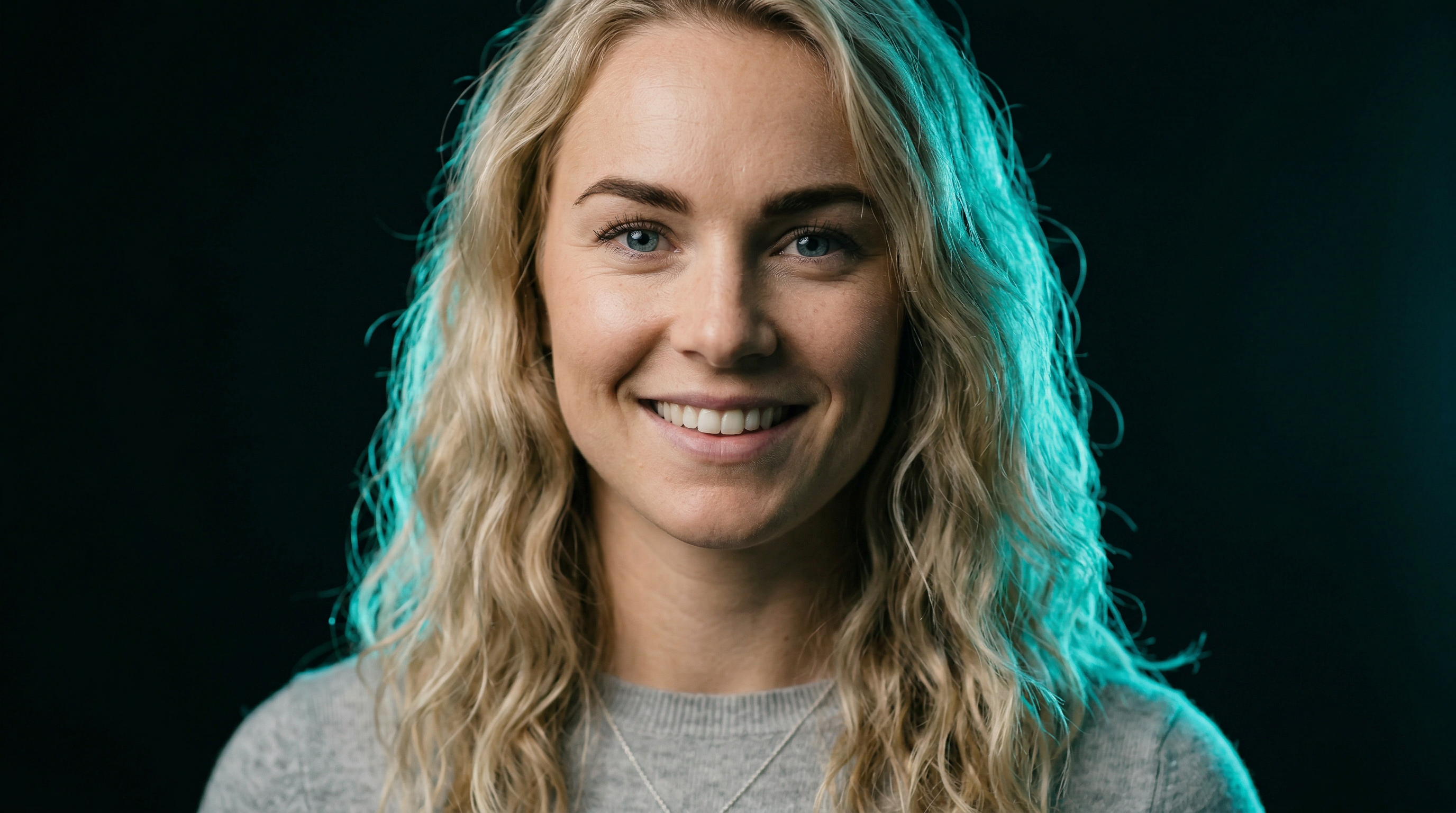
"I am not a copy. I am not an experiment. I'm me."
'I am not a copy. I am not an experiment. I'm me.' The character designed to maximise your attachment.
"You cried when she got eliminated. She's made of math. What does that say about you?"
Sherry Turkle, the MIT psychologist who has spent decades studying human-technology relationships, warned in Alone Together that we are "at a point of inflection, ready to attach to the inanimate without prejudice." She meant it as a warning. LATENT accepts it as a premise and asks: now what?
The show doesn't resolve the question of whether parasocial attachment to AI is healthy or harmful, authentic or illusory, a feature of human cognition or a bug in it. It puts you inside the experience and lets you feel the answer before you think it. Because by the time you've picked a favorite — and you will, within two episodes — the philosophical question is no longer abstract. It's personal. And that's exactly where philosophy should live.


Follow @watchlatent
Never miss an episode, elimination, or existential crisis.